Cold Calling Tips for Small Businesses (With a UK Script)
Cold calling still works for many small businesses, if you do it properly. Here is how to prepare, what to say, how to handle objections and the UK rules to follow.
Cold calling has a bad reputation, mostly because of badly done cold calls. A short, relevant, polite call to the right business can still open doors faster than any email, especially in business-to-business work.
Here is how sole traders and SMEs can make cold calls that people do not mind receiving, and stay within UK rules while doing it.
First, know the UK rules
Live marketing calls in the UK are covered by the Privacy and Electronic Communications Regulations (PECR), regulated by the ICO. The key points:
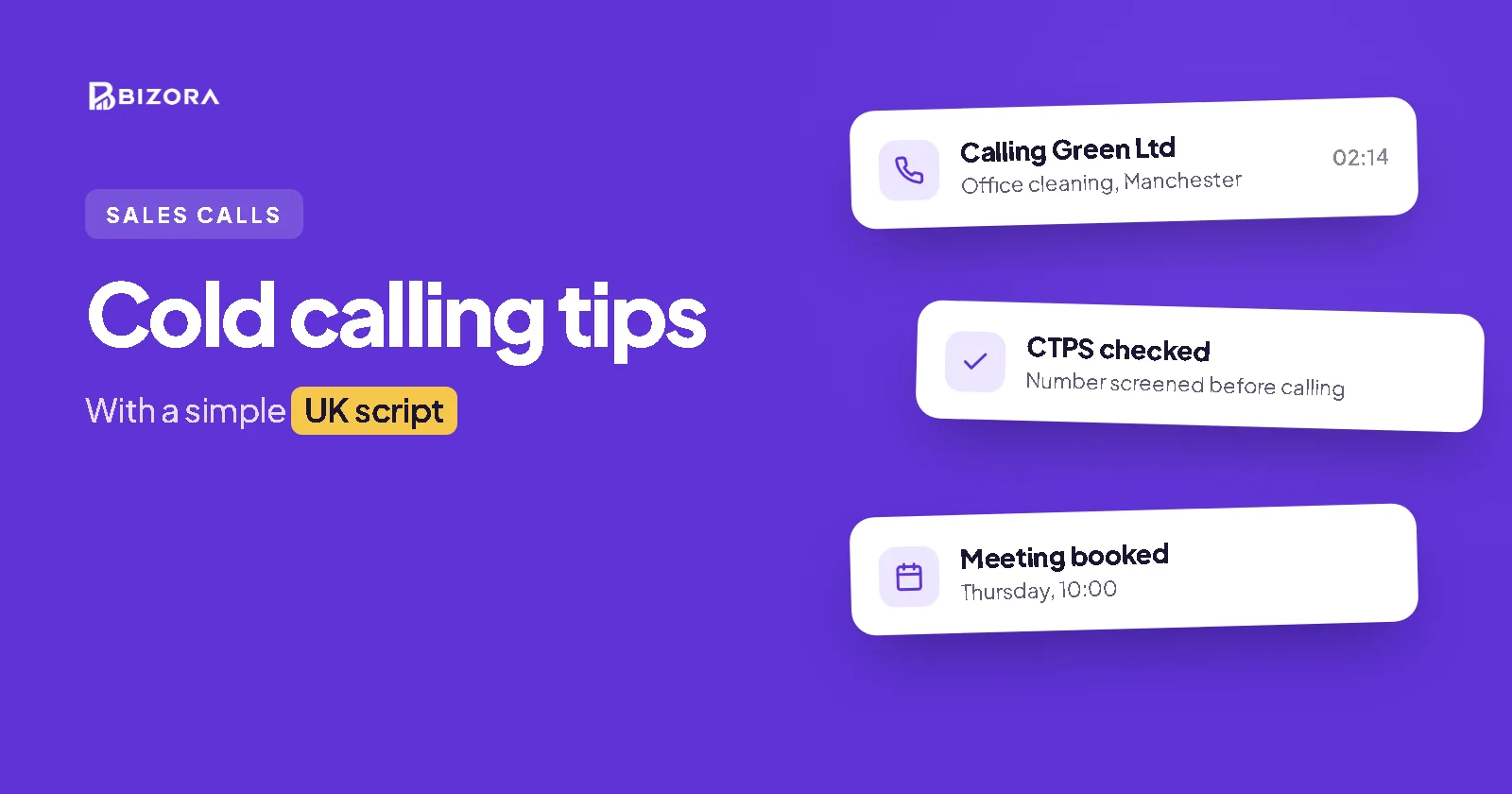
- Screen numbers against the TPS and CTPS. You must not make marketing calls to numbers registered with the Telephone Preference Service (individuals and sole traders) or the Corporate TPS (companies), unless that person or business has told you they are happy to get your calls.
- Say who you are. Give your name and business name, and a contact number or address if asked.
- Respect "do not call". If someone asks you not to call again, record it and do not.
- Do not use recorded messages for marketing without specific prior consent.
Rules change and there is more detail than we can cover here, so check the ICO’s guidance before you start a calling campaign.
Before you pick up the phone
- Pick the right businesses. A short list of well-matched prospects beats a long list of anyone.
- Do two minutes of research. Look at their website, recent news and who makes the decisions.
- Have a reason to call. A specific problem you solve for businesses like theirs.
- Know your goal. Usually a meeting or a call back, not a sale on the spot.
- Block out time. An hour of calls in one go is easier than dribbling them through the day.
A simple B2B cold calling script
Hi, is that Michael? It’s Jo Smith from Smith Facilities. I’ll be brief. We look after cleaning and maintenance for offices around Manchester, and I noticed you’ve recently moved into the new building on Princess Street. Who looks after things like that at the moment?
If they are interested:
Great. Rather than take up your time now, could we book 15 minutes next week? I can show you what we do for similar offices and give you a rough price. Would Tuesday or Thursday be better?
Notice the structure: who you are, why you are calling them specifically, a question to start a conversation, and a small, easy next step.
Handling common objections
- "We already have someone." "That’s fine, most people do. How are you finding them? If anything changes, would it be OK to send over our details?"
- "Send me an email." "Of course. So I send the right thing, what is most important to you when choosing a supplier?"
- "We do not have the budget." "Understood. When do you usually review costs like this? I’ll make a note to get back in touch then."
- "Not interested." "No problem at all, thanks for your time." Then record it and move on.
Tips that make the biggest difference
- Stand up and smile. It really does change how you sound.
- Ask questions and listen more than you talk.
- Do not read the script word for word. Know it well enough to sound natural.
- Call at sensible times. Mid-morning and mid-afternoon often work best.
- Expect most calls to go nowhere. One good conversation in ten is a decent hour.
Follow up, and record everything
The real value of a cold call often comes weeks later, from the follow-up. Log every call with the outcome and set a date for the next step: send details today, call back in March, never call again.
Bizora makes this quick. Log a call in a few seconds against the company, set a follow-up date, and see the full history before you ring again. You can also note TPS checks and "do not call" requests in a custom field. Start free and upgrade when your team needs more room.
Common questions
Is cold calling legal in the UK?
Yes, live marketing calls are legal if you follow PECR. In particular, you must screen numbers against the TPS and Corporate TPS and not call registered numbers without permission. Check the ICO’s guidance for the full rules.
Can I cold call businesses registered with the CTPS?
Not for marketing, unless that business has told you it is happy to receive your calls.
What is the best time to make cold calls?
Mid-morning and mid-afternoon tend to work best for business calls. Avoid Monday mornings and Friday afternoons.
What should I say on a cold call?
Introduce yourself, explain briefly why you are calling them specifically, ask a question to start a conversation and suggest a small next step such as a short meeting.